
European Economic Congress
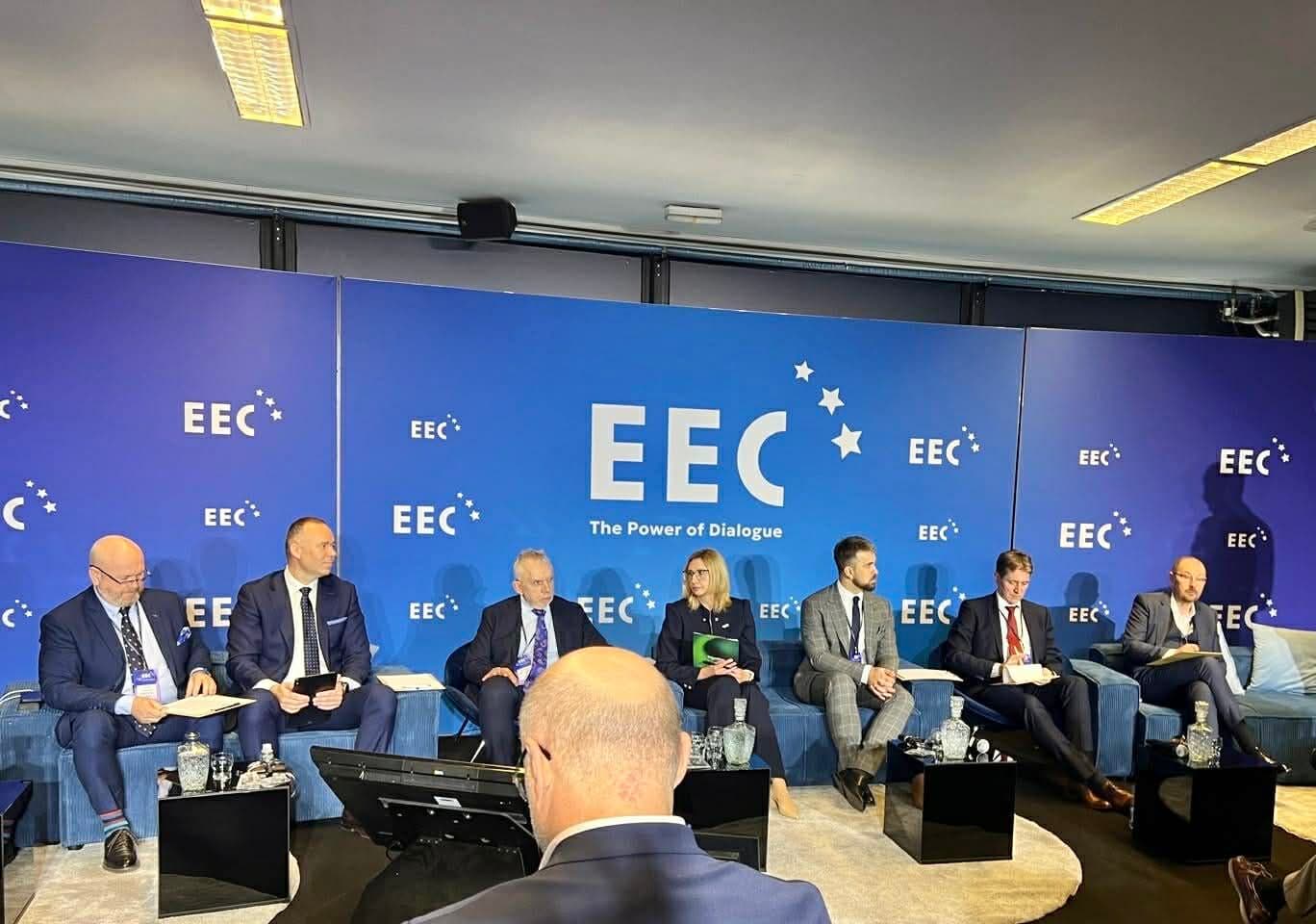
During the recent European Economic Congress, panel discussions and industry conversations underscored a critical evolution in the regional green transition. Local content is no longer a passing trend, but a fundamental structural shift that will deeply impact how value chains are designed, structured, and governed across Europe in the coming years.
A central insight from the congress is that existing Public Procurement Law does not inherently require legal overhaul, as it already allows for non-price criteria. Instead, the true hurdle lies in mindset, implementation practices, and the consistent application of well-designed metrics. To overcome this, the regional ecosystem must move away from a purely cost-based mindset toward a results- and impact-driven approach that explicitly rewards local value creation, systemic innovation, and regional ecosystem building.
While there is a growing commitment within Polish industry and academia to co-create value and commercialize domestically rooted technologies, practical execution remains bottlenecked by a lack of clear mechanisms for technology development and intellectual property security. Furthermore, the broader systemic view of value creation as active innovation—incorporating startup collaboration, scaling pathways, and structured venture creation—is frequently missing from the mainstream policy debate. Central and Eastern Europe has a unique opportunity to bridge this gap by establishing clear commercialization pathways that turn raw R&D into market-ready technologies.
To translate these high-level discussions into tangible economic impact across the region, Cleantech for CEE advocates for anchoring the local value approach in two fundamental pillars. First, large industrial players should consider setting a strategic ambition to allocate a defined share of CapEx toward financing and implementing locally developed technologies, ensuring that major investments actively strengthen domestic technological capabilities. Second, industry, local universities, and research institutes must foster structured partnerships to move past simple cost efficiency and accelerate the commercialization of local innovation.